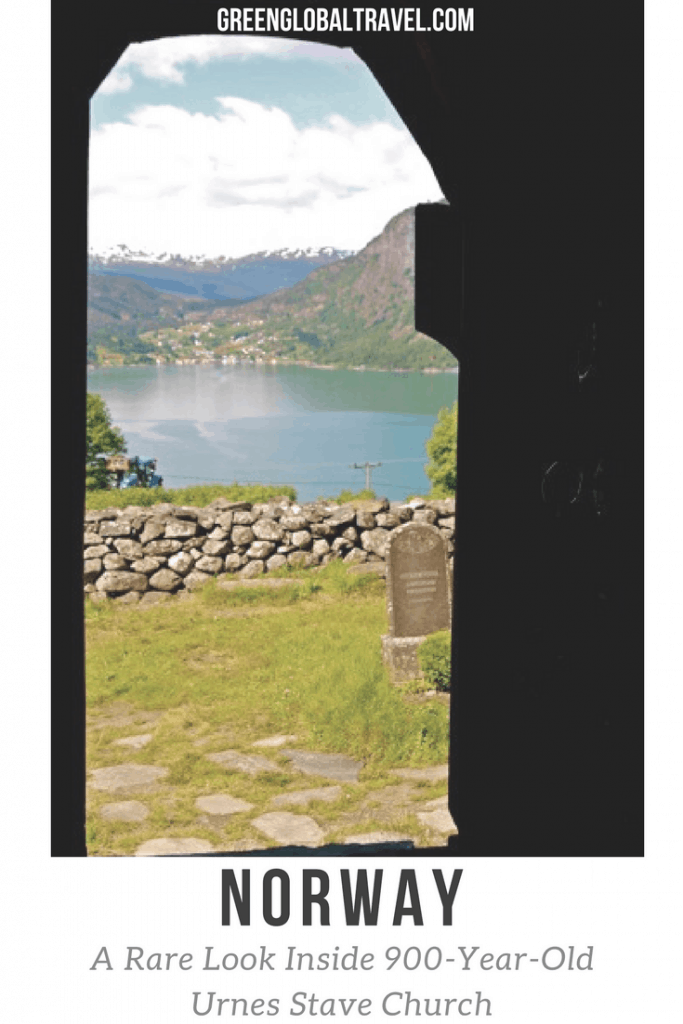
Wooden Portal of the Stave Church at Urnes Norway Art
Disclaimer: This mail service may contain affiliate links. All hosted affiliate links follow our editorial policies.
Do a Google Image Search for photos of Norway'southward Urnes Stave Churchand you'll find hundreds of results.
Simply if you scan through them, you'll discover that 99.nine% of these are exterior shots, and the few interior shots that practice evidence upwards are actually from ane of Norway'south 27 other stave churches.
There'south a reason for this: Fortidsminneforeningen, the Club for the Preservation of Norwegian Ancient Monuments (which owns 8 stave churches, 4 stone churches, and 28 other historically significant properties in the land), strictly forbids photographs from being taken within Urnes Stave Church.
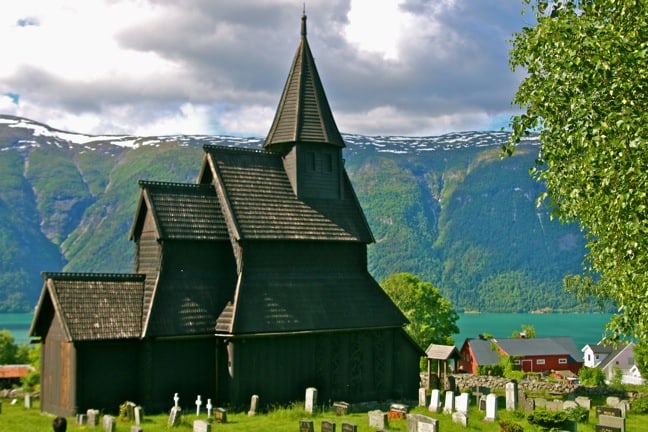
Knowing that we were journalists visiting Kingdom of norway on consignment, our guide One thousand arit Boen allowed us to take photos during our private tour.
But we had to become special permission from Fortidsminneforenignen in order to publish them here on Green Global Travel, which they recognized as being similarly devoted to cultural preservation.
So we're delighted to offer our readers an incredibly rare glimpse inside this 900-twelvemonth-old UNESCO Globe Heritage Site.
READ More: The Norse Gods: An Intro to Viking Mythology & Cardinal Sites in Kingdom of norway
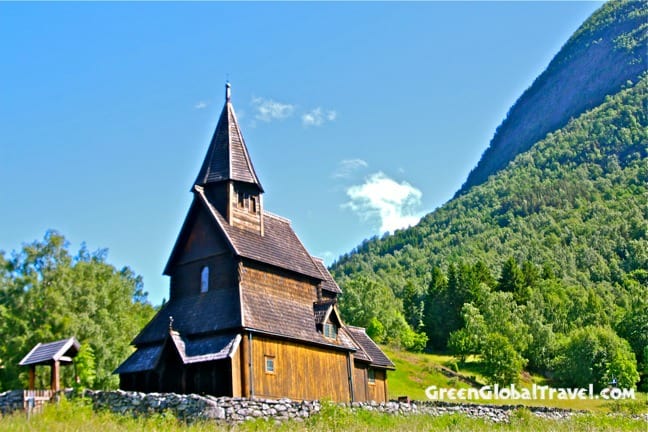
Stave Churches
Stave churches are wooden Christian churches dating back to medieval times.
The name comes from the timber framing structure: The load-bearing posts were known as stafr in Erstwhile Norse, or stav in Norwegian.
Once common in northwestern Europe, stave churches are now establish primarily in Norway.
They're important considering they provide a historical link between the ancient art and architecture of the Viking Age and that of Christianity.
READ More than:Famous Vikings in History that Inspired Vikings Valhalla on Netflix
Oldest Stave Church in Norway
Not merely isUrnes, the oldest Stave Church building in Kingdom of norway, but information technology is also the earth.
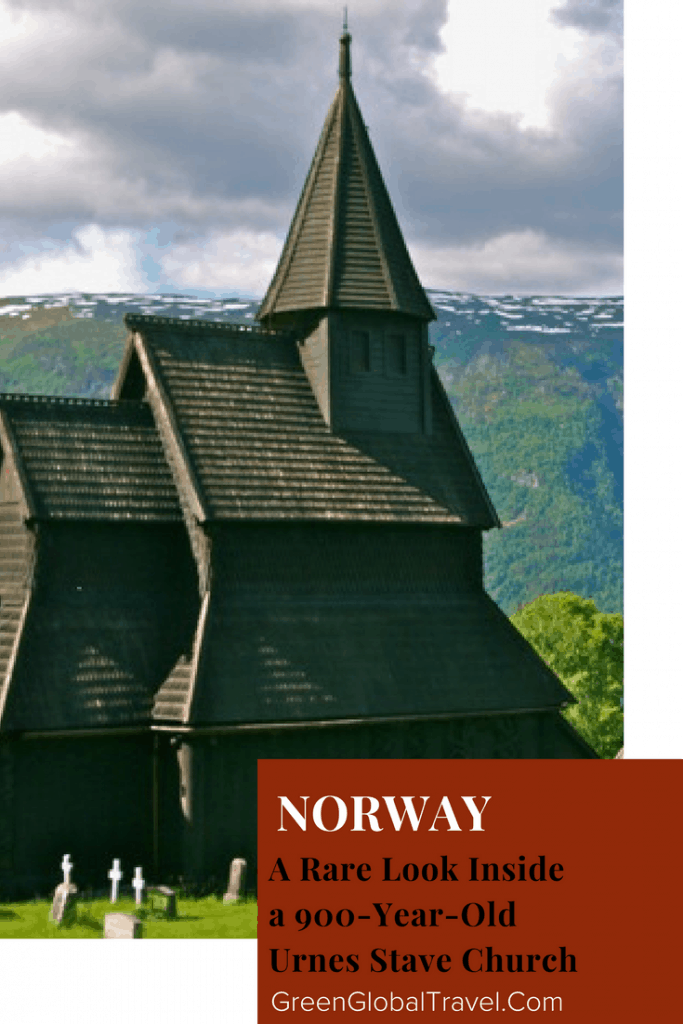
It was congenital around the year 1130 on a hill in Norway's Sogn og Fjordane county, providing spectacular views of the Lustrafjorden .
Simply archaeological excavations have revealed that this is really the fourth church built on the site.
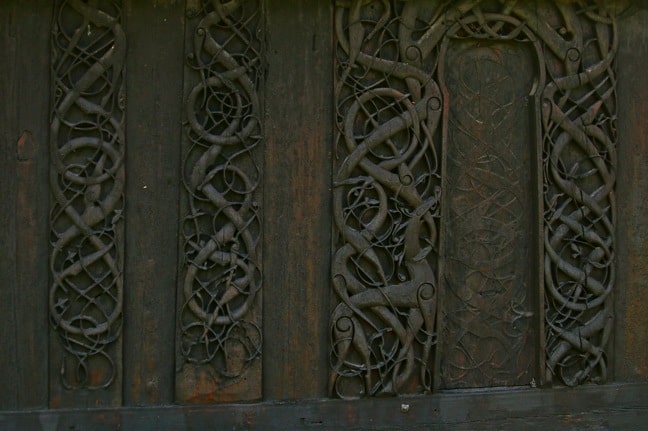
The famous northward wall (pictured here) features elaborately busy sections from the previous church, including the ornate door, wall planks and a corner mail service.
Busy gables from that church are at present covered in order to preserve them.
READ More than: The Adventures of Erik the Scarlet & Leif Erikson, the Near Famous Vikings in History
Urnes Stave Church Exterior
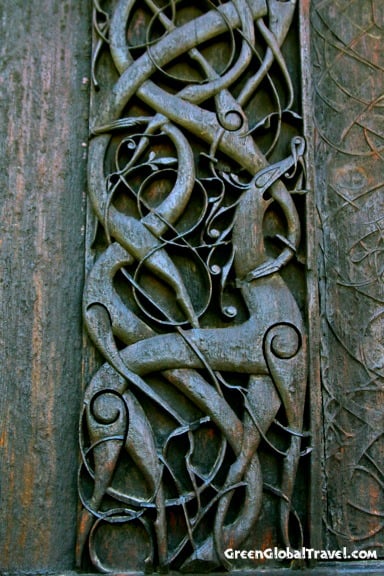
This detail from the left side of the door is the most iconographic element of the exterior, defining the distinctive Urnes fashion (which is equally influenced past Viking art and The Book of Kells).
There are two interpretations of the paradigm, the most popular of which is that the bottom figure is a lion, symbolizing Christ, fighting the evil serpent, which represents Satan.
But some believe the original church was actually torn downward because it featured scenes from Norse mythology .
The 2003 book A Earth History of Architecture suggested that, "The intertwined snakes and dragons represent the end of the world co-ordinate to the Norse legend ofRagnarök."
READ More: Wardruna'south Aboriginal Nordic Folk Traditions for Vikings Soundtrack
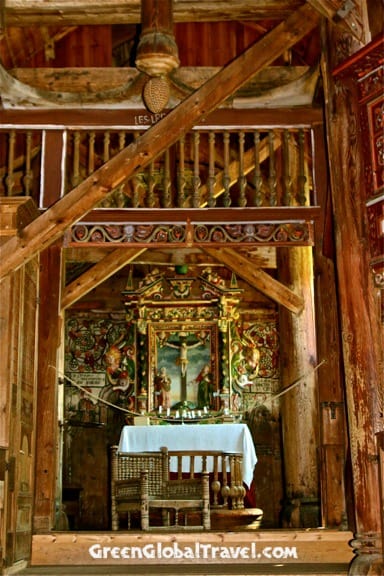
Inside Urnes Stave Church
As the last bout grouping leaves and we enter the church building for the first time, Mary and I both murmur "Woooooow" in reverent awe, our voices reverberating off the aboriginal timber.
Massive wooden columns (a.thou.a. staves) frame the middle space, leading the eye upwardly to rounded arches made from the strong, naturally curved part of the tree where the roots and torso run into.
Huge wooden beams (added in the Middle Ages) criss-cross the high cardinal nave and chancel area in order to provide boosted structural support.
A Medieval chandelier hangs down from the ceiling.
READ More: Epic Fjords of Kingdom of norway Road Trip
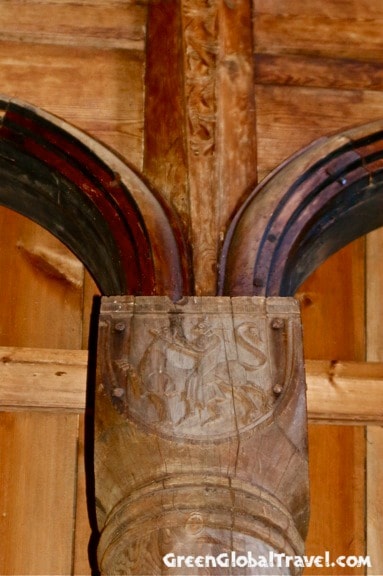
At the peak of each stave is a capital that provides cushioning support, each of them hand-carved with images similar to those plant in The Book of Kells.
In that location are fifty capitals in all, depicting everything from animals to religious pilgrims.
The most significant of these images is that of a bishop: The fashion of his hat helped historians date the church to the 12th century earlier carbon dating revealed that the timbers used in construction were felled in 1129-1130.
READ More than: Driving Norway's Jotunheimen Mountains
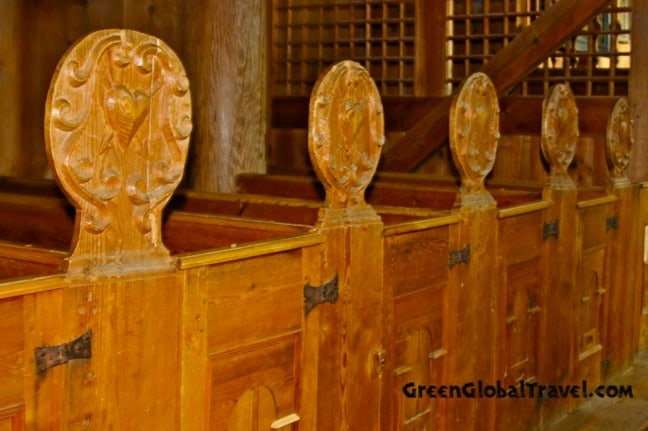
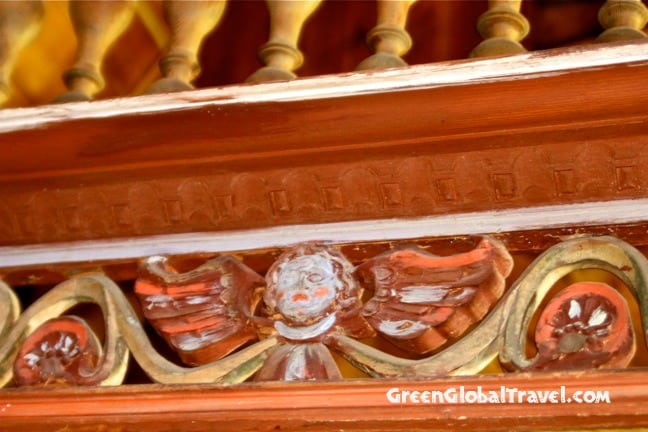
The intricate detail on the woodwork inside Urnes Stave Church is striking.
These pews were put in place after the Protestant Reformation of 1537, with women and men sitting on contrary sides of the alley.
At the front of the nave, backside the latticed chancel screen, is the Krokastolen (a.m.a the Munthe Family Pew), an enclosed pew created in 1662 for a wealthy family from the area.
READ More than: Climbing Nigardsbreen Glacier, Kingdom of norway- A He Said/She Said Story
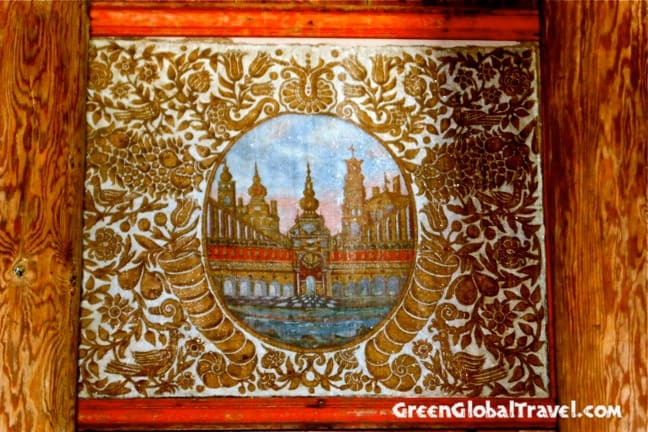
Because the worship of saints was prohibited after the Reformation, most of the oldest church art disappeared in one case Martin Luther's teachings came to prominence.
A carved Madonna and a male head carved from wood are currently on display in the Bergen Museum.
Only a wealthy family unit later commissioned this ornate painting, which is believed to correspond Heaven and is made from bits of glass mixed with paint to make information technology shimmer like gold.
READ More:Top 5 Kingdom of norway Eco Attractions
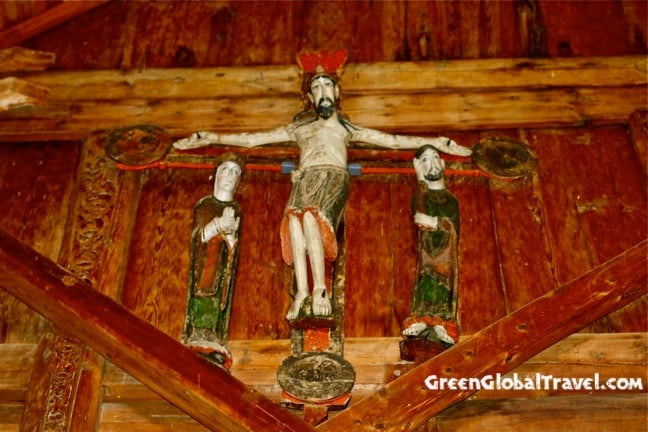
Many of the church's interior pattern elements were added in the 17th century.
This includes a baptismal font (1640), a wooden canopy above the altar (1665), a pulpit (1693–1695) and the altarpiece (1699), which depicts Christ on the cantankerous flanked past the Virgin Mary and John the Baptist.
But the group of figures pictured above, depicting the historic crucifixion scene at Golgotha, date back to the 12th century.
READ More: The 25 Best Places to Spend Christmas in Europe
In that location's as well a 12th century medieval candelabrum in the shape of a ship atop the altar, evoking images of Kingdom of norway's Viking past.
According to Marit, this send holds nine candles, which is considered a sacred number in Norse mythology (come across: 9 worlds supported by Yggdrasil, the valknut symbol of iii interlocking triangles forming nine points,nine surviving deities of Ragnarök, etc.) .
At the end of every service at Urnes, they'd ring the bong nine times.
So, despite the best efforts of Christianity to eradicate Paganism, its influence remains obvious in Norway today.
READ MORE: 20 Symbols of Christmas: The History & Meaning
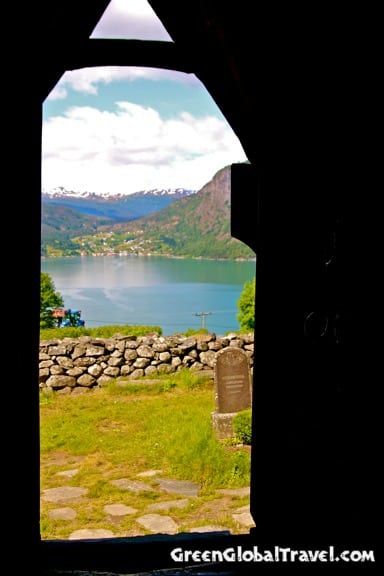
As we see another tour group making its style upwardly the path towards the church, Mary and I take a few minutes to soak up the serenity to be found within this ancient, sacred site.
It's hard to depict the feeling of existence immersed in a grand years of history, imagining the love and labor and loss contained in a building that dates back to before the Blackness Plague.
But we left feeling honored past the opportunity to experience Urnes Stave Church without another soul in sight, and to share its stories and images with the globe. –Bret Love; photos by Bret Love & Mary Gabbett
Our special thank you get to Fortidsminneforenignen: Visit their website to aid support the preservation of Kingdom of norway'southward ancient monuments.
Our trip was sponsored by Visit Norway and Fjord Norway, with clothing provided by Helly Hansen and baggage provided by Hawkeye Creek. Only we volition never compromise our obligation to our readers. Our opinions remain our own.
IF YOU Similar It, Pin It! 

If you enjoyed our post on Urnes Stave Church building, you might as well like:
Source: https://greenglobaltravel.com/inside-urnes-stave-church-norway/
0 Response to "Wooden Portal of the Stave Church at Urnes Norway Art"
Post a Comment